

Every golfer has faced it at some point. You hit a shot and when you walk up to your ball, you find it in a spot that looks almost impossible to play. Maybe it has nestled against the trunk of a tree, buried in thick rough, or stuck on the lip of a bunker. In golf, these are considered unplayable lies. The good news is that the Rules of Golf provide relief options that can save your round and help you avoid making a bad situation worse. Understanding this rule and knowing when to use it is an important skill for golfers of all levels.
What Is an Unplayable Lie?

According to the Rules of Golf, a player may declare their ball unplayable anywhere on the course except when it is in a penalty area. That means if your ball is in the fairway, rough, bunker, or even tangled in bushes, you have the right to decide it cannot be played. The choice is entirely up to you. No one else, not even your playing partners, can make the call for you.
The key to remember is that declaring a ball unplayable always comes with a one-stroke penalty. While adding a stroke may sound painful, it is often much better than hacking at the ball in an impossible situation and risking even bigger mistakes.
Relief Options for an Unplayable Lie
Once you declare a ball unplayable, you have three main options for relief.
Stroke and Distance
You can always go back and play your previous shot from the same spot, whether that was the tee, fairway, or anywhere else on the course. This option is called stroke and distance. It is the simplest but also the most costly in terms of time and distance since you give up all the yardage you gained with your last shot.
Back-on-the-Line Relief
You may also drop your ball on a line that extends directly back from the hole through the spot where your ball lies. You can go back as far as you want on that line and then drop within one club length of that point. This option is useful if you need to clear a tree, bush, or other obstacle but still want to keep moving toward the green.
Lateral Relief
Your third option is to drop a ball within two club lengths of where the original ball lies, no closer to the hole. This is often the best choice if your ball is up against an obstruction like a tree trunk or resting in thick grass. It gives you enough space to create a stance and make a reasonable swing without losing too much distance.
Special Considerations for Bunkers

If your unplayable ball is in a bunker, you still have the same three options with one important difference. If you choose lateral relief or back-on-the-line relief, your drop must remain inside the bunker. That can feel limiting, but it keeps the challenge of the bunker intact. However, the rules also allow an additional option. You can take back-on-the-line relief outside the bunker with a two-stroke penalty. This gives you a way out if your ball is buried in the sand with no chance of escape.
When to Take Unplayable Relief
One of the biggest mistakes golfers make is trying to play shots from situations where the odds are stacked against them. A ball tangled in thick roots or pressed against a tree can tempt you to take a wild swing. More often than not, this leads to hitting the ball only a few feet, breaking a club, or even injuring yourself. Knowing when to take unplayable relief is about making a smart decision.
If you have less than a 50-50 chance of pulling off the shot, relief is often the smarter play. A one-stroke penalty may seem frustrating, but it usually saves strokes in the long run by keeping you in play and giving you a chance to recover.
Tips for Using the Rule
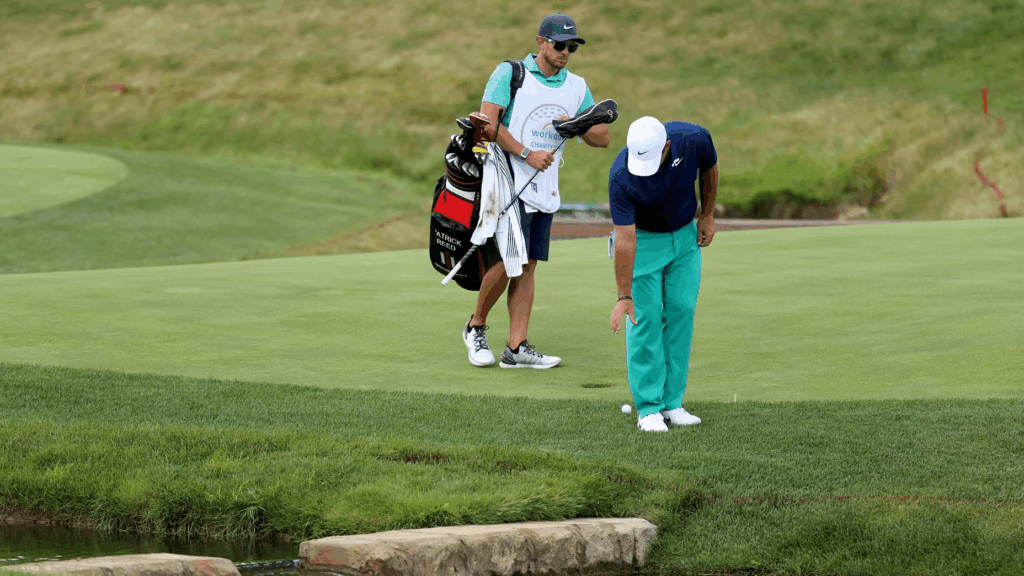
Practice dropping properly. Under the current rules, you must drop the ball from knee height, and it has to stay within the relief area. Make sure you know how to do this to avoid accidental penalties.
Think ahead before choosing your relief option. If you are near the green, lateral relief may give you the best chance at an up and down. If you are far away but blocked by trees, back-on-the-line relief might open up a better angle.
Do not let pride dictate your choice. Some players avoid taking relief because they see it as giving up. In reality, it is simply using the rules to your advantage. The best players in the world take unplayable relief when the situation calls for it.
Final Thoughts
The unplayable lie rule exists to keep the game fair and playable. Instead of forcing you to hit impossible or dangerous shots, it offers clear options to continue the hole with only a one-stroke penalty. Knowing when and how to use this rule can help you protect your scorecard and keep your round moving forward.
The next time you walk up to your ball and realize you have no shot, do not panic. Remember that you have options. Use the unplayable lie rule wisely, and you will save strokes and frustration in the long run.