
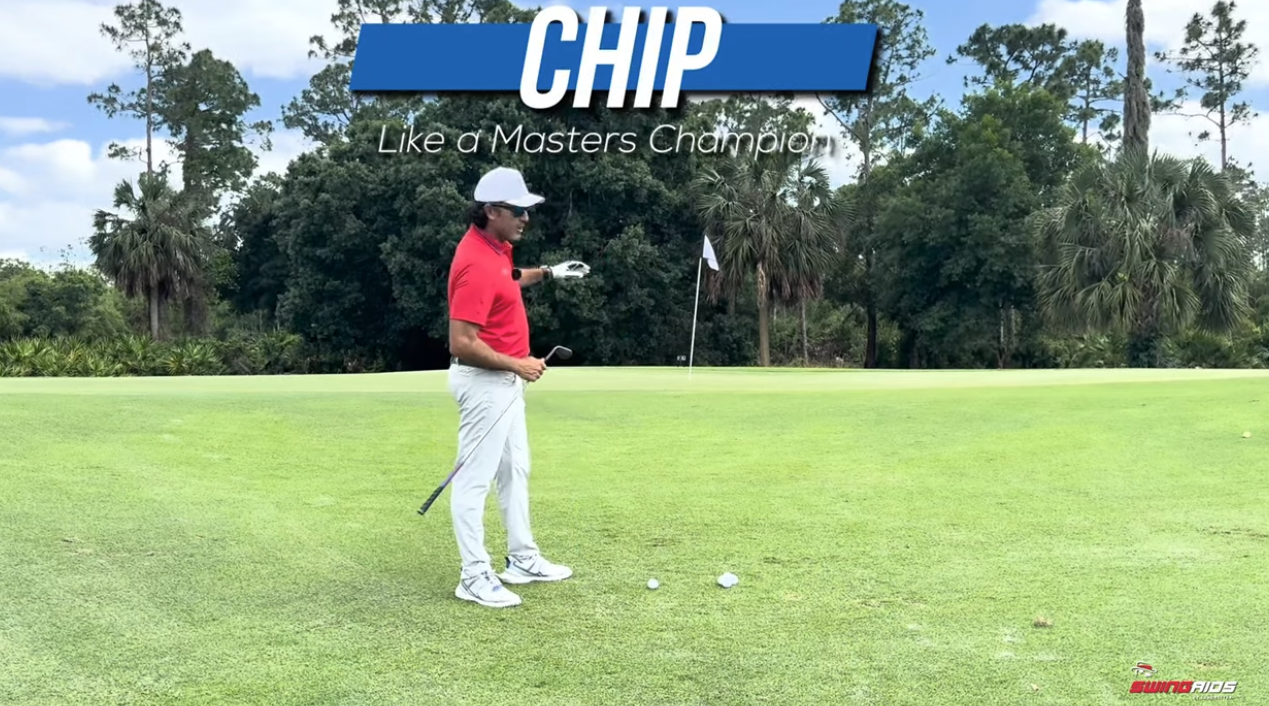
You miss the green, and the flag is tucked with almost no green to work with. The ball is sitting on an elevation change, the pin is tight, and you have maybe two steps of putting surface to land on. Most golfers answer that challenge by trying to scoop the ball up into the air and that’s exactly when the trouble starts.
So says Santiago Mari of the Leadbetter Golf Academy in Naples, who breaks down a far simpler approach in the video below: keep the club low, rotate your body through, and let the ball do the work. The result isn’t just a better chip it’s a shot you can’t miss badly.
Watch: Why Arm and Body Connection is Crucial for Chipping Success! — Leadbetter Swing Aids
The Mistake: Scooping the Ball into the Air
When faced with a tight pin and little putting surface, most golfers’ instinct is to get the ball up to “scoop” it with the hands. Mari’s warning is blunt: the more you try to lift the club up into the air, the more you expose the blade of the club, which makes fat and thin shots equally likely. Get that wrong and the ball shoots over the green, turning a potential par save into a scramble.
The fix is to stop thinking up and start thinking forward.
The Fix: Keep It Low and Rotate Through
Here’s the simple feel Mari wants you to practice:
- Set up neutral and balanced no dramatic changes to your stance.
- Keep the club low on the way back and low on the way through. You are not hitting up into the air; you’re hitting forward.
- Rotate your torso toward the target. The arms and body move as one unit, with the hands staying low and the club kept moving.
- Trust the loft. The ball jumps up and down naturally on his demonstration shot he hit the pin, landed soft, with just two steps of green to work with.
“I really did not try to get the ball up in the air I just rotated my body through it, kept those hands low, and kept the club moving. By doing that, you increase your chances of hitting a good shot.” — Santiago Mari
The Training Aid: Leadbetter Putting Bar
To groove that “connection” feeling, Mari reaches for one of his favorite training aids the Putting Bar (Putting Par), designed by David Leadbetter. Normally used to feel arm-and-body connection on putts, it works just as well here:
- Connect yourself into it and set up square.
- Instead of winging the club up with your hands, let the aid force you to rotate the club back and forward.
- The result on video: two shots that felt like misses but were good misses, consistent and on line.
Why “Good Misses” Matter
This is the real payoff of the connected chip. Mari’s philosophy: if you’re going to miss this shot, it shouldn’t penalize you. You should never miss it over the green, and you shouldn’t leave it short. A shot you can’t miss badly means you at least walk away with a decent look at par and that’s how your score starts coming down.
| The scoop (what most golfers do) | The connected chip (what you should do) |
|---|---|
| Hands wing the club up in the air | Hands stay low, club moves forward |
| Exposes the blade — fat and thin both likely | Arms and body rotate as one — consistent contact |
| Ball shoots over the green when contact is off | Misses stay near the pin — “good misses” |
| High risk on tight pins | Gives the tight pin’s elevation no chance to bite you |
Bottom Line
If you “putt to survive” after every missed green, this is the drill that changes the math. You don’t need to flip the ball into the air to reach a tight pin — you need connection: low hands, rotating torso, and a club path that stays low through impact. Simplify the approach, make your misses good ones, and you’ll start converting those “survive” holes into legitimate up-and-downs.
Video credit: Leadbetter Swing Aids. The Putting Bar used in the video is available at leadbetterswingaids.com.