
Some golf courses just don’t want you to have fun. The fairways are tight. The greens are firm. Miss in the wrong spot and you’re staring at a recovery shot instead of a birdie look. And if your scores tend to live in the 90s, tough layouts can feel downright punishing.
If you walk onto a difficult layout trying to play the same way you do on your home track, frustration is almost guaranteed. A smart tough golf course strategy starts with recognizing that these courses demand different decisions, not perfect swings.
Stop Treating Every Hole Like a Skill Test
On tough golf courses, ego gets expensive in a hurry. One of the most common mistakes average golfers make is assuming every hole demands their best swing. In reality, many holes demand restraint. Tough courses are designed to punish aggression, which is why an effective tough golf course strategy prioritizes position over power. Taking a smart approach when working your way around the course will pay off in your scoring opportunities. Keep some of these thoughts in mind:
- Not every par 4 is a driver hole.
- Not every par 5 is a birdie opportunity.
- Not every tucked pin deserves your attention.
When you stop forcing shots and start managing the hole, doubles become far less common.
Redefine What “Good” Golf Looks Like
On easier courses, good golf might mean lots of greens in regulation and birdie chances. On tougher tracks, good golf often looks boring. Prioritize fairways over maximum distance off the tee, shoot for the middle of the green consistently and get home in two. It’s not flashy or exciting, but it leads to better scoring opportunities.
This, however, is where frustration can find it’s way in. Golfers may feel like they’re playing poorly when they’re actually executing a solid tough golf course strategy. A 25-foot birdie putt on a difficult green is a win, even if it doesn’t feel exciting.
Judge decisions, not outcomes, and tough courses start to feel manageable.
Pick Safer Targets Than You Think

Tight layouts usually feature smaller greens, deeper bunkers, and rough that makes getting up-and-down unpredictable. Instead of aiming at flags, a better tough golf course strategy is aiming away from the most penal trouble. The steps below will give you a safer approach into greens, leading to a higher likelihood of success.
- Favor the widest part of the green.
- Aim to the side with the easiest miss.
- Accept longer putts.
This approach doesn’t feel aggressive, but it keeps momentum intact and stress levels low.
Manage Misses, Not Perfect Shots
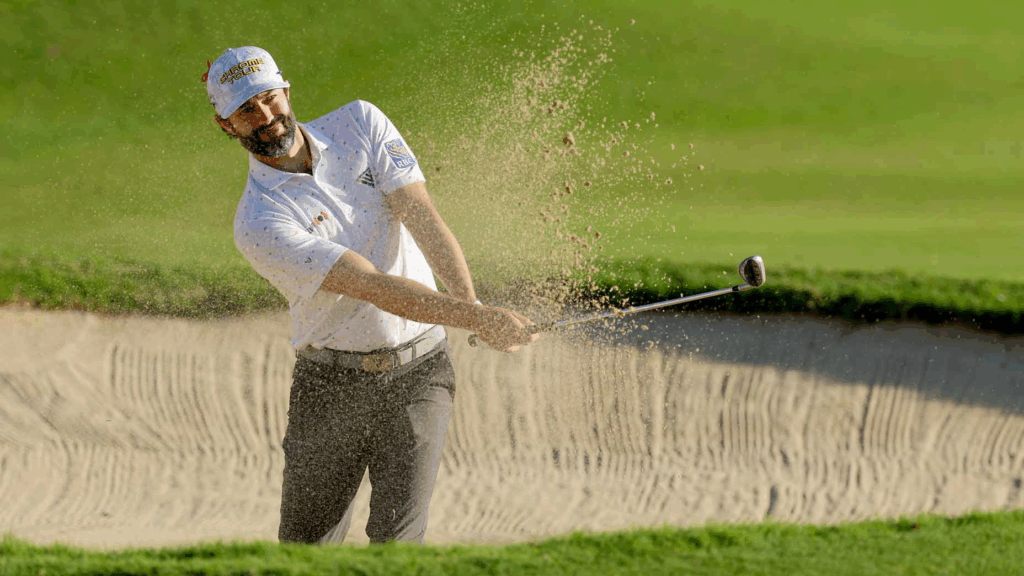
You’re going to miss greens. Everyone does, especially on demanding layouts. There’s no getting around this fact.
What separates golfers who stay composed from those who spiral is how they respond to those misses. A consistent tough golf course strategy accepts that recovery shots are part of the round, not a personal failure. Remember the following to better manage challenging moments as you play:
- If you’re short-sided, don’t get cute.
- If the lie is bad, don’t force it.
- If bogey is available, take it.
Hero shots are where frustration turns into big numbers.
Slow the Round Down Mentally
Tough courses create pressure because every shot feels important. The hazards are closer. The margins are smaller. That’s why a successful tough golf course strategy includes slowing things down mentally. Take an extra breath. Commit to the shot. Accept the result. Rushing because a hole looks intimidating almost always leads to mistakes.
Accept That Scoring Will Look Different

When you’re playing a tough, unfamiliar golf course, your score more than likely will reflect that. Adjust your scoring goals accordingly. Instead of focusing on your total score, try to limit the number of doubles or triples you make. Highlight how many fairways or greens in regulation you can hit. Track how many times you’re able to hit a solid recovery shot. When it comes down to it, adjusting expectations is part of playing smart. It’s not lowering standards, t’s executing a realistic tough golf course strategy for the course in front of you.
Final Thought
Tough golf courses aren’t meant to be conquered, they’re meant to be managed. When you stop trying to prove something and start playing smarter, frustration fades. You’ll still hit bad shots. You’ll still face tough holes. But with the right tough golf course strategy, difficult layouts can become some of the most satisfying rounds you play. On tough tracks, boring golf isn’t a weakness. More often than not, it’s the smartest path to better scores.