
Wondering which distance tool makes the most sense?
If you’ve ever stood on a tee box wondering what club to hit or how far it is to that front bunker, you’ve probably thought about getting a rangefinder or a GPS. But which one should you use?
- Do you want the exact yardage to the pin?
- Are you trying to manage hazards or doglegs better?
- Do you want fast, hands-free information?
Each tool brings different strengths. Knowing how they work and when to use them can help you make better decisions, avoid trouble, and lower your scores.
What does a rangefinder do?
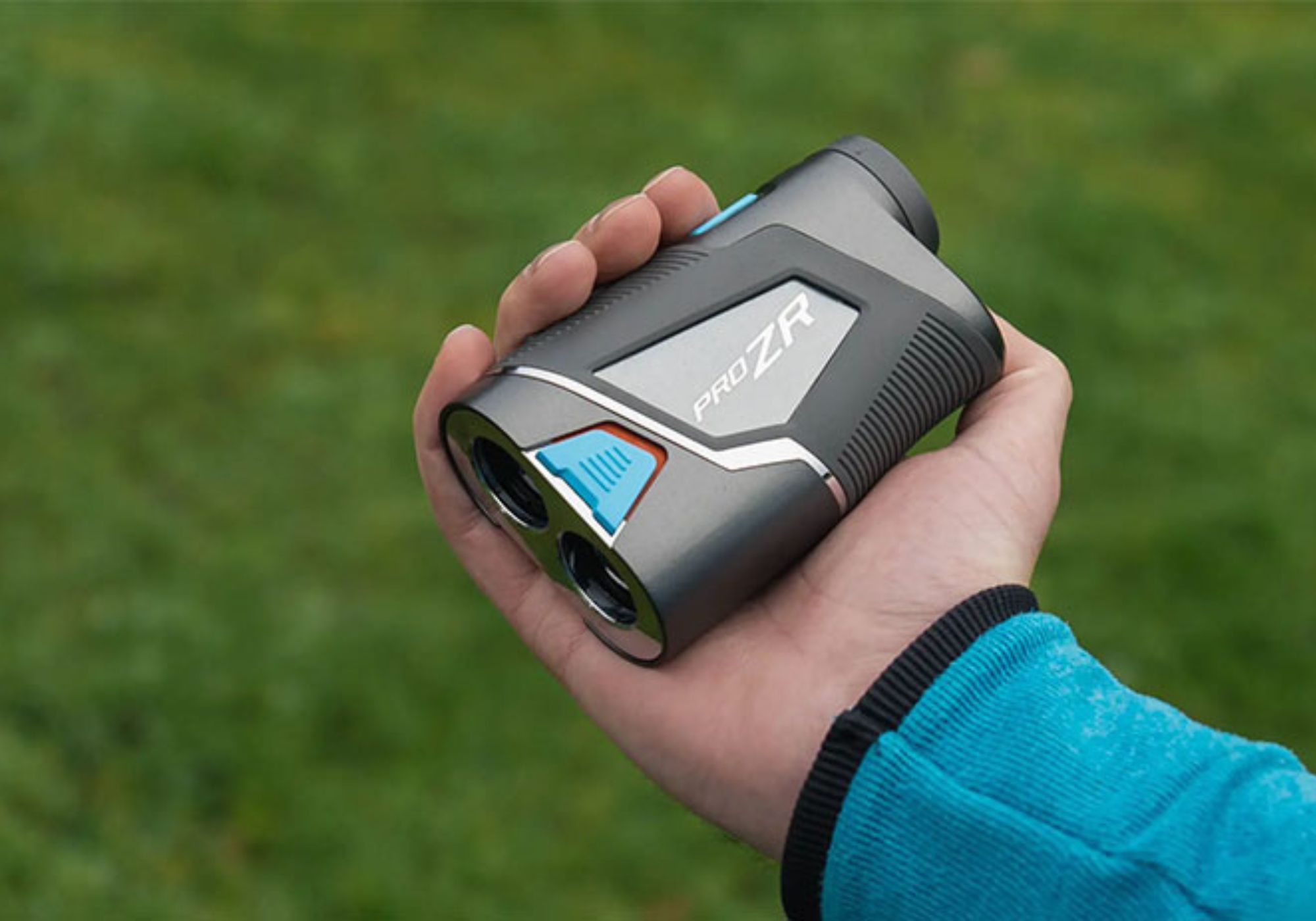
A laser rangefinder uses a beam to measure the distance to a visible target. You aim, click and it tells you how far away that tree, bunker lip, or flag is. Most new rangefinders also give a little vibration when they lock onto the pin. If you want to learn more about range finders we made a full article with our favorites and a deeper dive here.
Best for:
- Getting the exact distance to the flag
- Dialing in approach shots
- Confidently picking a club when the target is in view
What does a GPS system do?
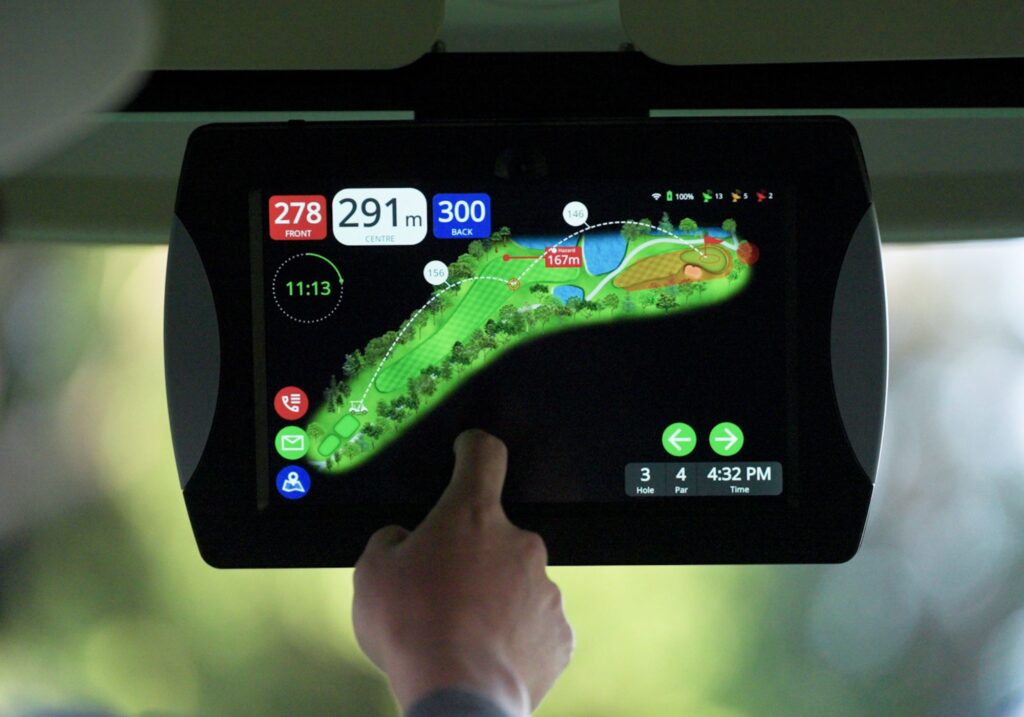
GPS tools come in a few forms. You can use a watch, a handheld device, a cart screen, or even a phone app. These systems use satellite data to give yardages to mapped points on each hole, including the front, middle, and back of the green, hazards, layup spots, and more.
Best for:
- Seeing the overall hole layout
- Planning around trouble spots
- Getting fast distances without needing line of sight
Comparing the two
Each tool offers something different. Here’s a breakdown of how they stack up in the areas that matter most on the golf course.
Precision
- Rangefinder: Gives exact distances to anything you can see and lock onto, often down to less than a yard.
- GPS: Offers distances to mapped areas, usually accurate within a few yards. You get front, center, and back yardages along with hazard distances, but not the exact pin.
If you’re focused on flag-hunting, a rangefinder has the edge. If you want full-course awareness, GPS might be better.
Visibility and use
- Rangefinder: Requires a clear line of sight. If you can’t see the target, you can’t shoot it.
- GPS: Works anywhere on the hole. Even if the flag is around a corner or blocked by trees, GPS gives you numbers you can use.
GPS shines on blind shots and unfamiliar courses. Rangefinders are best when you have a visible target.
Speed and convenience
- Rangefinder: Takes a few seconds and a steady hand to lock onto your target.
- GPS: A quick glance gives you yardages right away. GPS watches are especially fast since they’re always on your wrist.
If you’re all about pace of play and simplicity, GPS has the advantage.
Course management
- GPS: Helps you make smarter decisions by showing the shape of the hole and where trouble lies. You can plan layups, avoid hidden hazards, and get a better sense of how far you really need to hit your shot.
- Rangefinder: Excellent for specific targets but doesn’t show you what’s ahead or what lies beyond your line of sight.
For the strategic golfer, GPS is a valuable planning tool.
Flexibility
- Rangefinder: Works on any course, even if it’s not mapped. No software or updates required.
- GPS: Relies on course maps. Most are accurate, but if a hole has been redesigned recently, it might be slightly off.
Can you use both?
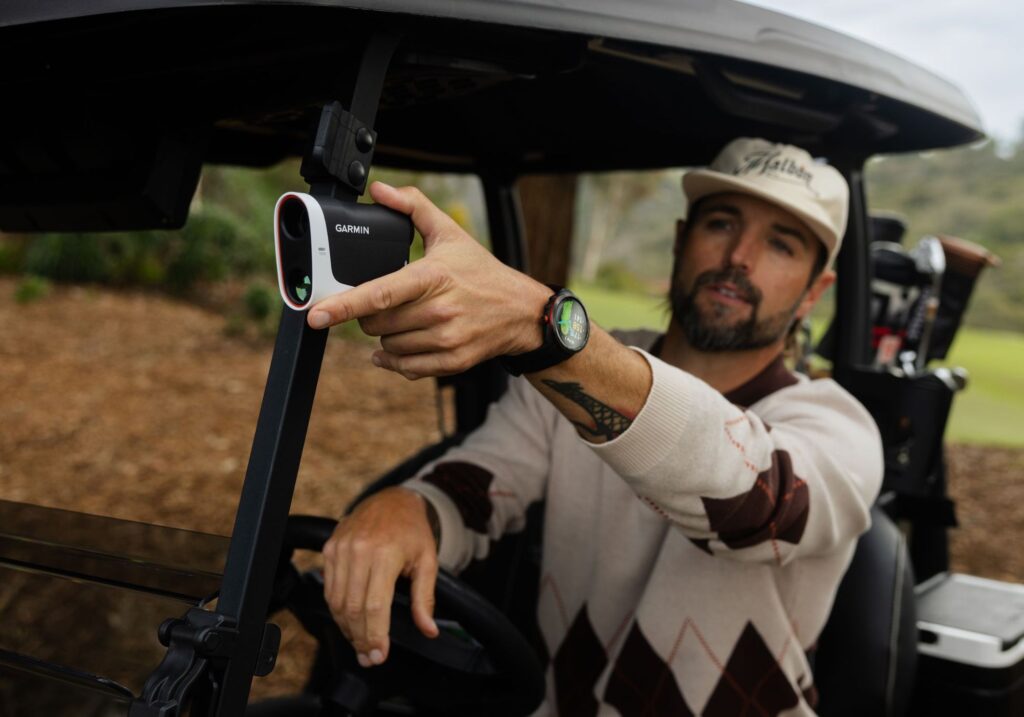
Absolutely. Many golfers use GPS for hole layouts and general guidance, then grab their rangefinder for exact yardages on approach shots or par threes.
A GPS watch can tell you that the pin is in the middle at 148 yards, but your rangefinder might reveal that today it’s actually tucked in the back at 161. That extra info can help you commit to the right club.
Who benefits most from each?
- New golfers: GPS is simple and helpful. It builds awareness and helps with course management.
- Strategic players: GPS gives a full picture of the hole and helps plan your way around the course.
- Experienced golfers: Rangefinders provide the precision to aim tight and hit confident shots.
- Walkers: GPS watches are lightweight and quick. Great for hands-free play.
- Players working on club gapping: Rangefinders help measure real distances to flags during practice sessions.
Final thoughts
There’s no wrong answer when choosing between a rangefinder or GPS. It comes down to how you play and what kind of information helps you most.
If you want exact yardages to the pin, a rangefinder is tough to beat. If you want help managing the course and making smarter decisions, a GPS system can be a big help.
And if you want to cover all your bases? There’s no reason you can’t use both.
Your turn
What do you use on the course? Have you found one works better than the other, or do you combine both? Share your experience and let others know what’s helped your game.