

Short game is where a tournament is won or lost. Whether you’re chipping, pitching, or dialing in that 50-yard approach, control and consistency are essential. The right drills can help beginners quickly improve distance judgment, spin, and contact, turning wedges into a trusted scoring weapon.
Give these drills a try. They just might take your short game skills to a new level.
Clock Face Wedge Distance Drill
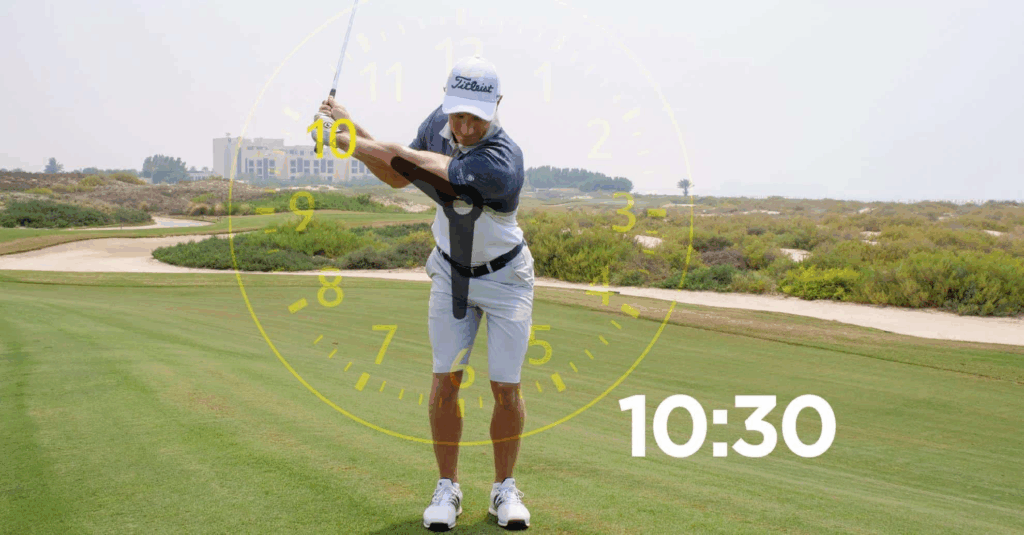
Why it matters: Consistent partial swings are the backbone of distance control.
Visualize a clock face above your stance with 12 o’clock directly overhead, 6 o’clock pointing toward the target. Execute swings from 8-to-4-o’clock for short chips, 9-to-3 for medium shots, and 10-to-2 for longer distance wedges. Practice this progression with each wedge in your bag to quantitatively understand how far each swing travels.
Over time, you’ll build instinctual control and know exactly which swing length to use for 70, 50, or 30 yards.
Ladder Drill for Target Precision
Why it matters: Improving landing zone accuracy sharpens scoring opportunities.
Set up three targets, like 30, 50, and 70 yards, for example. Start by hitting two balls into the first zone, then move through zones 2 and 3 respectively. Once you’re comfortable, challenge yourself in sequence: zone 1 → zone 2 → zone 3 → zone 2 → zone 1, without missing.
It forces you to pace your swing and landing precisely, perfect for approach shots where you need to avoid water or make greenside putts easier.
Towel-Under-Arms Rotation Drill
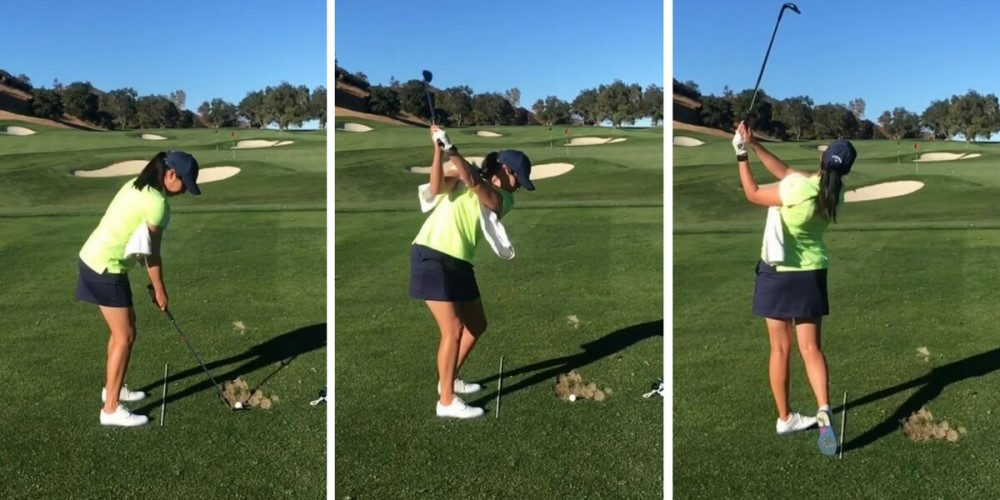
Why it matters: Encourages body rotation and discourages arm-based, inconsistent chipping.
Place a towel under both armpits and make pitching or chipping strokes, keeping the towel in place. This forces you to use your torso and shoulders through the shot rather than flicking with your wrists. By integrating rotation, you’ll improve contact quality and consistency, both of which are a foundation of great wedge play.
Noren’s Stick Behind Ball Drill
Why it matters: Trains descending strike and prevents “scooping” the ball.
Place an alignment rod or club a foot behind the ball, across your target line. Make short, controlled wedge swings aiming not to hit the stick. This reminds you to strike down at the ball, not lift it, and maintain a steeper, more efficient attack. Gradually build the swing length as you consistently miss the stick cleanly.
Spin Variation Drill

Why it matters: Teaches you to manipulate spin for different green conditions.
Start by executing wedge shots from the same distance, alternating between high-spin and lower-spin trajectories. Employ steeper swings and more wrist hinge for higher spin, versus shallow strokes with less hinge for lower spin. Watching how the ball reacts upon landing teaches you to adapt spin on the fly, which is essential on fast or firm greens.
Practice Flow for Maximum Impact
To structure a wedge-focused practice session:
- Warm up with the Clock Drill, sweeping from short to longer swings.
- Transition into the Ladder Drill, challenging your targeting under time pressure.
- Use the Towel Rotation Drill to reinforce contact rhythm and body rotation.
- Add Noren’s Stick Drill, reinforcing the proper downward strike.
- Finish strong with the Spin Variation Drill, dialing in control over the ball’s behavior on landing.
Final Thoughts
Mastering wedges takes both feel and structure. Start with drills that reinforce precise control, (i.e. distance, strike, spin, and contact) and practice with purpose. Even a short, focused 20-minute session that works through these drills will build muscle memory and confidence quickly.