

How to stop three putting is a crucial aspect of improving your golf game.
I want you to picture yourself on the first tee box. You stripe your tee shot center cut in the fairway. Stepping into shot two with a wedge in hand, you make great contact and end up 20 feet from the pin, situated to start the round off on the right foot with a par or better. Then the worst case scenario happens; you leave your lag putt short, miss the par putt and tap in for a three putt bogey. If you’re ready to put a stop to three putting, these drills are a great spot to start. Let’s dig in.

How to Stop Three Putting with Speed Control
Speed control plays a massive role in stopping the dreaded three putt. The chart below shows data gathered from Arccos on the relative proximity to the hole that amateur golfers of varying handicap ranges average from 100-120 yards. Keep in mind, this data includes all approach shots, whether they land on the green or just short.
| Handicap Range | Avg. Distance from Pin (feet) |
| 0-5 | 49 – 55 ft |
| 6-10 | 55 – 62 ft |
| 11-15 | 62 – 70 ft |
| 16-20 | 70 – 80 ft |
| 21+ | 80 – 90+ ft |
| All Amateurs (avg.) | 50 – 70 ft |
What we can take away from this data is that on average, amateur golfers may be faced with a chip to get the ball as close to the hole as possible to save par, or a large amount of green to cover with a solid lag putt. Speed control plays a major role in successful lag putting, and the drill below is a great one to work on honing in your skills to stop three putting.
The Ladder Drill

When working on how to stop three putting, the ladder drill is one of the most effective drills for speed control a golfer can practice. This drill is easy to perform, requiring nothing more than your putter, some golf balls and a practice green. Here’s how it works:
- Place balls at increasing distances (e.g., 15, 25, 35, 45 feet)
- Putt them in order, focusing only on finishing within 3 feet of the hole
- If a ball finishes outside that zone, restart the ladder
This drill’s effectiveness comes into play through multiple facets that transfer directly to the course. First, it trains the brain to match stroke length and tempo to putt distance. It also focuses on two putt outcomes instead of trying to hole every putt. By practicing this drill, you’ll improve your ability to consistently leave the ball in a three foot circle around the hole, which is a great step on the quest to stop three putting.
Making the In-Between Putts
Let’s face it, even with consistent practice on lag putting, we will still leave putts short or roll them past the “circle of friendship” while golfing with buddies. Maybe there’s money on the line, or maybe they just know you don’t feel confident in the four to six foot range, but being able to drop those putts is another key aspect on learning how to stop three putting. This next drill is a great one to add to your practice routine to focus directly on those putts.

The Clock Drill
To perform the clock drill, you’ll want at least six golf balls set up at various locations on the “clock” around the hole. Make sure they are spaced out evenly, and start at four feet. In order to move back to five feet, you must hole every putt without missing. Miss and you go back to the beginning. Once you’ve made your way around the clock at every distance, the drill is complete.
Some notes:
- Go through your entire putting routine on each putt. This drill is about building confidence in your game. You wouldn’t rush a putt to save par, so don’t rush it in practice.
- Change it up by using hole locations with slope involved. You won’t always see a perfectly flat putt from 4 – 6 feet.
The clock drill is a fantastic drill to pair with the ladder drill because it addresses cleaning up the second putt if we leave our lag further than ideal from the hole. It helps to address hitting your start line, improves putter face awareness, and increases short-putt confidence when it matters most.
Through the Gate
We’ve addressed our speed and confidence in mid-range putts with the first two drills. Our last drill to add to your routine to help you stop three putting is the gate drill. Training face and path control is critical to hitting your start line – a key aspect to making short putts.
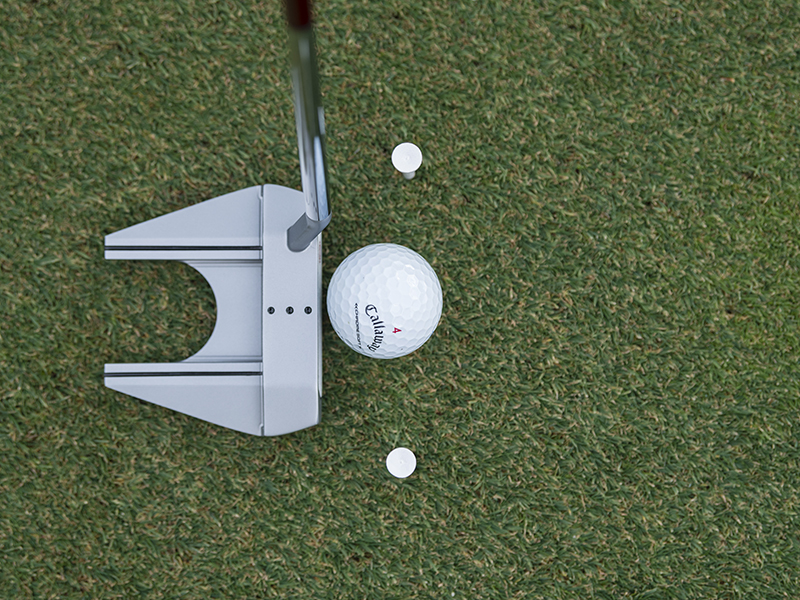
The Gate Drill
Setup for the gate drill could not be simpler:
- Place two tees just wider than your putter head
- Position them 12–18 inches in front of the ball
- Start with a straight putt (flat if possible)
To perform the drill, follow the steps below:
- Roll putts through the gate
- If the ball clips a tee, it means the face wasn’t square
- Make 5 in a row before moving back
Often times when we miss short putts, it is not a speed issue. It is a face issue. The gate drill directly targets that issue by providing physical feedback if you miss. Some of the best putters I know have this drill in their practice routine and perform it every time I see them on the practice green.
Putting it all together
| Drill | What It Trains | How It Stops 3-Putts |
|---|---|---|
| Ladder Drill | Pace & lag | First putt finishes closer |
| Clock Drill | Short-putt confidence | Converts the second putt |
| Gate Drill | Face control & start line | Eliminates pushed/pulled misses |
If you’re ready to stop three putting (or at worst reduce the number of your three putts), try implementing these drills into your practice routine. Each one addresses a separate aspect of what you need to find success on the greens. With enough work, you’ll be rolling the rock better, and shooting lower scores, in no time.