

When a golf shot goes sideways, most players immediately blame their swing. But often, the real culprit is something far simpler: alignment. If your body and clubface aren’t pointed where they should be, even a great swing can send the ball in the wrong direction.
The good news? Alignment is one of the easiest fundamentals to fix, and once you do, you’ll hit more consistent shots without changing your swing. Here’s how to get it right.
Understand the Basics of Alignment

Think of alignment as setting the stage for your swing. Your target line (an imaginary line from your ball to your target) is the anchor. Your clubface should point directly at that line, while your body (feet, hips, and shoulders) should run parallel to it.
In other words, you want your setup to look like railroad tracks:
- The inside rail is your body line.
- The outside rail is the target line.
If those “rails” get crossed, your shot is likely headed somewhere you didn’t intend.
Use an Intermediate Target

One of the simplest tricks pros use is picking a spot a foot or two in front of the ball that’s directly on the target line. It could be a piece of grass, a discolored patch, or even a small leaf.
By aligning your clubface to that nearby target instead of one 150 yards away, you reduce the margin for error. Once the clubface is set, simply align your body parallel to it.
Train with Alignment Sticks

Alignment sticks (or even a couple of spare clubs laid on the ground) are a beginner’s best friend. Here’s how to use them:
- Lay one stick on the ground pointing at your target line.
- Place a second stick parallel to the first, about shoulder-width apart, to represent your body line.
- Set up to the ball with your feet against the inside stick to confirm that you’re square.
Practicing with this visual guide trains your eyes and body to recognize what proper alignment feels like. Over time, you’ll be able to replicate it without the sticks.
Check Your Shoulders and Hips
A common mistake is to focus only on foot alignment. But if your shoulders or hips are open (pointing left for a right-handed golfer) or closed (pointing right), your swing path can get thrown off.
Next time you’re on the range, take a moment to step back after you’ve addressed the ball. Look at your shoulder line and hip line relative to your target. They should run parallel to your feet and the target line.
Practice with the “Toe Line Drill”
Here’s a quick self-check drill:
- Address the ball normally.
- Without moving your feet, place a club across the tips of your shoes.
- Step back and see where that club is pointing.
If it’s left or right of your intended target line, you’ll know you’ve been setting up crooked. It’s a quick way to catch alignment issues before they creep into your round.
Don’t Forget Ball Position
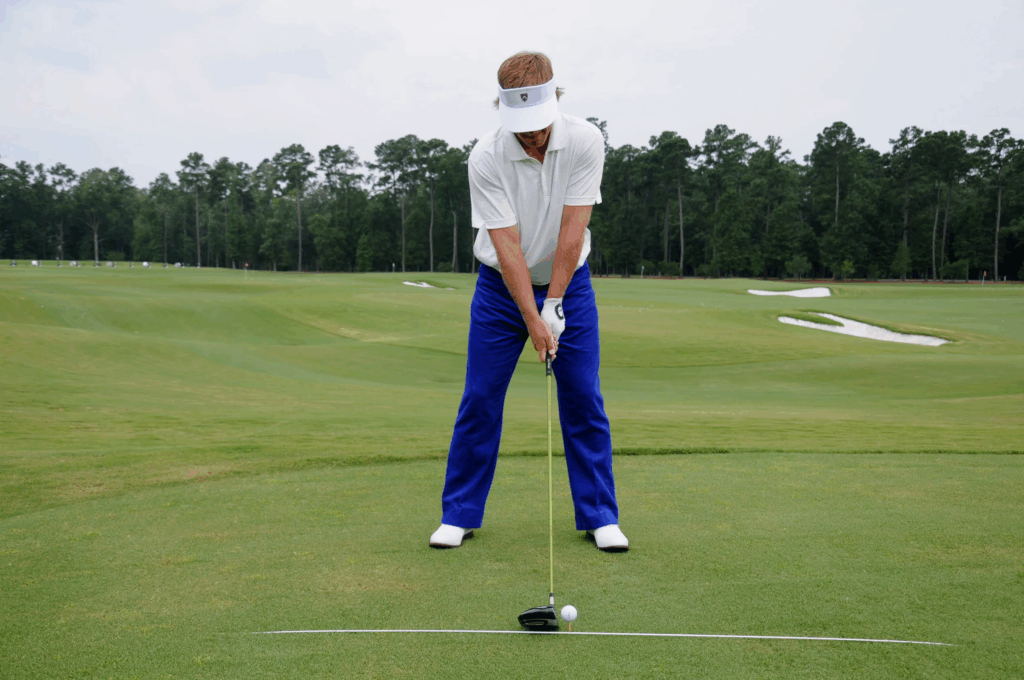
Alignment isn’t just about direction, it also affects ball position. A ball that’s too far forward or back in your stance can trick your eyes and throw off your aim. Use your alignment sticks to check both direction and ball placement until it becomes second nature.
Build Alignment into Your Pre-Shot Routine
The best way to take alignment from the range to the course is by making it part of your pre-shot routine. Here’s a simple one to follow:
- Stand behind the ball and pick your target.
- Choose an intermediate target a few feet in front of the ball.
- Aim your clubface at that spot.
- Step in and set your body parallel to the line.
If you follow those four steps before every shot, you’ll dramatically reduce misalignment errors.
Final Thoughts
Great swings don’t matter if you’re aimed in the wrong direction. Alignment may not be as flashy as learning how to draw the ball or add extra yards off the tee, but it’s one of the biggest keys to consistent golf.
By using tools like alignment sticks, checking your shoulders and hips, and building alignment into your pre-shot routine, you’ll eliminate one of the most common hidden causes of wayward shots. Get your setup right and you’ll finally give your swing a fair chance to shine.