

Few things can rattle a golfer faster than lightning-quick greens. Putts that normally cozy up to the hole suddenly race three feet past. Chips that you swear would check instead keep rolling…and rolling. Fast greens reward precision, but they can also expose a shaky touch or mental tension. The good news? With the right setup, strategy, and mindset, you can turn those slick surfaces into an advantage.
Adjust Your Setup and Stroke
Speed control starts at address. On faster greens, the key is minimizing energy at impact without losing rhythm. Most players do this by narrowing their stance slightly and gripping the putter a touch lower on the handle to gain more feel.
You’ll also want to shorten your backstroke and focus on a softer, more pendulum-like motion. Think smooth rather than slow. Trying to decelerate mid-stroke is a guaranteed path to inconsistency. Instead, make a compact, even tempo stroke that lets the putter swing freely through impact.
If you tend to jab or hit putts too firmly, experiment with a lighter grip pressure. Tension in the hands and arms translates into excess hit. Loosen up, keep your shoulders doing the work, and let the putter head glide.
Read More Break (and Respect It)

On fast greens, the ball spends more time rolling slowly near the hole, which means gravity has more time to take over. That translates to more break than you might expect.
Amateurs often under-read breaking putts, assuming pace alone will hold the line. But when greens are slick, a putt that starts too firm will never have a chance to take the full break. Take an extra moment to study the slope from multiple angles, especially the low side, and play more break than usual.
If you’re unsure, err on the high side. A putt that dies high still has a chance to trickle in. One that starts low? It’s missing all day.
Think “Dying Speed”
You’ve probably heard the phrase “let the ball die into the hole.” On fast greens, that advice becomes gospel. You’re better off leaving a 10-footer one roll short than racing it three feet by.
A great drill to help dial in touch is the tee-box circle drill:
- Place four tees around a hole in a three-foot circle.
- Try to roll five consecutive putts that stop inside the circle (they don’t need to go in).
- Change distances and slopes to improve feel.
This trains your brain to control distance rather than force.
Lag Putting is Your Best Friend

Unless you’re playing on the PGA TOUR, you’re not going to make many 30-footers. But on fast greens, you can absolutely avoid three-putts by focusing on lag speed.
Pick a landing zone a few feet short of the hole instead of the cup itself. Visualize the ball’s rollout, not the make. This subtle shift in intention helps you regulate energy and avoid those knee-knockers coming back.
If you’re practicing, spend at least half your putting time on long putts. It’s the fastest way to lower scores on quick greens.
Chipping and Pitching Adjustments
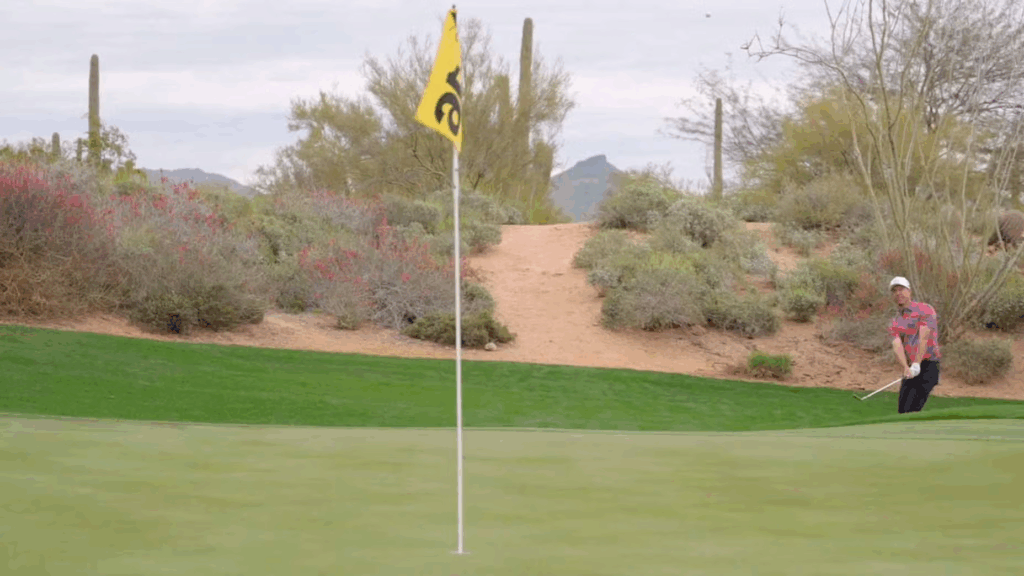
Fast greens don’t just affect putting, they demand better short-game touch, too. When you’re chipping, choose lower-lofted clubs that let the ball spend more time rolling than flying. A pitching wedge or 9-iron bump-and-run gives you far more control than a lob wedge that lands soft but releases unpredictably.
Land the ball just onto the putting surface and let the slope do the work. If you have to carry rough or fringe, use a sand wedge with a shorter swing and minimal wrist hinge. Focus on tempo and let the club’s bounce slide, not dig.
Don’t Forget Mental Speed
Fast greens can mess with your head. After watching a few putts race by, you might start babying the stroke or changing technique mid-round. The key is to commit to every stroke. Pick your read, visualize the roll, and trust the motion.
One of the best pieces of advice comes from Brad Faxon, long regarded as one of the best putters ever: “Your last look should be at the target, not the ball.” That reinforces touch and frees your body to respond to feel, not fear.
Practice on Quick Surfaces
If your home course greens are usually slow, you can still prepare for faster conditions. On the practice green, find downhill putts (they’ll mimic tournament-style speed). Work on rolling the ball softly, with focus on start line and pace rather than holing everything.
Even rolling putts across your living-room carpet with a small target, like a coin or tee, can help you learn “gentle speed” control.
Final Thoughts
Fast greens don’t have to be intimidating, they just demand finesse and awareness. Adjust your setup, trust a smooth tempo, play more break, and embrace dying speed. Focus on lag putting, simplify your chipping strategy, and keep your mind calm.
When you learn to respect speed instead of fight it, you’ll discover that quick greens can actually make you a better, more disciplined player.