
If you’ve ever walked off the course thinking, “I hit the ball fine but my score doesn’t show it,” chances are your short game is to blame. The ability to chip, pitch, and putt with confidence is what separates a good round from a frustrating one. The best part? Improving your short game doesn’t require big swing changes or endless time at the driving range. With the right drills, you can sharpen your touch and start saving strokes almost immediately.
Here are some simple but effective drills to help you dial in your short game.
The Circle Drill (Putting)
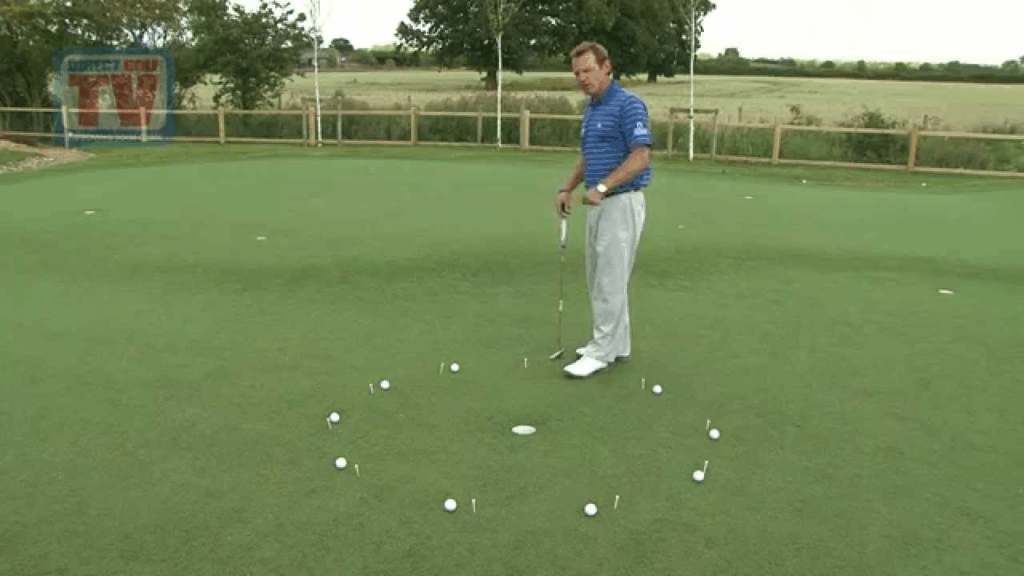
Nothing boosts confidence on the greens like knowing you can sink short putts. The Circle Drill builds consistency and takes the pressure off those knee-knockers you’ll face during a round.
How to do it:
- Place 6–8 balls in a circle around the hole, each about 3 feet away.
- Work your way around the circle, putting each ball until you’ve holed them all.
- If you miss one, start over until you can complete the full set.
This drill simulates the pressure of having to make putts when it matters. Once you’ve mastered 3 feet, move the circle back to 4 or 5 feet to make it more challenging.
The Ladder Drill (Lag Putting)
Lag putting is all about distance control and leaving yourself close enough to two-putt rather than three-putt. The Ladder Drill teaches you how to control pace on longer putts.
How to do it:
- Pick a flat section of the green.
- Place tees at 10, 20, 30, and 40 feet.
- Start at the closest tee and putt to the fringe, trying to stop each ball just short of the edge without rolling past.
- Work back through the distances, focusing on consistent speed.
This drill trains your feel and ensures you’re not leaving putts embarrassingly short or racing them past the hole.
The One-Handed Drill (Chipping)

Chipping requires touch, and sometimes using both hands makes golfers too “handsy” with the club. The One-Handed Drill isolates your lead hand to create better control and cleaner contact.
How to do it:
- Grab a wedge and a few balls around the practice green.
- Hit short chips using only your lead hand (left hand for right-handed players).
- Focus on brushing the grass and letting the club’s loft do the work.
This drill grooves the feeling of the correct motion and prevents the dreaded scooping action that leads to thin or fat shots.
The Fringe-to-Spot Drill (Pitching)
Getting up and down requires not just solid contact but also accuracy. The Fringe-to-Spot Drill helps you learn to land the ball exactly where you intend.
How to do it:
- Place a towel or small target 3–5 feet onto the green from your chipping spot.
- Hit pitches with the goal of landing the ball on the towel and letting it release to the hole.
- Adjust distances and targets to simulate different greenside lies.
The beauty of this drill is that it shifts your focus from just “getting it close” to picking a specific landing spot, which is how good players control their short game.
The Up-and-Down Challenge (Game Simulation)

Drills are great, but golf is played shot to shot, not in isolation. The Up-and-Down Challenge ties everything together under pressure.
How to do it:
- Drop 10 balls in various spots around the practice green, like bunkers, the rough, and tight lies.
- Play each ball out as if you’re on the course: one chip or pitch, then one putt.
- Keep score: how many times do you get up and down?
This drill introduces variety and the kind of pressure you’ll face during a round, forcing you to think about shot selection, landing spots, and execution.
Final Thoughts
A strong short game is the fastest way to lower your scores. You don’t need to spend hours pounding drivers to see results. 20 minutes on the practice green with these drills can make a noticeable difference the very next time you play.
The key is to practice with purpose. Instead of mindlessly hitting chips or rolling random putts, use these structured drills to challenge yourself. Not only will your technique improve, but your confidence will grow. And when you stand over that tricky chip or nervy 4-footer on the course, you’ll know you’ve already put in the work.