

One of the simplest and most overlooked ways to control your wedge game is by adjusting ball position. Many players immediately think about changing their swing or buying new equipment to alter ball flight, but often, the fix is as simple as moving the ball an inch forward or back in your stance. Understanding how ball position affects launch, spin, and contact can give you far greater control over distance and trajectory, especially around the greens.
Why Ball Position Matters
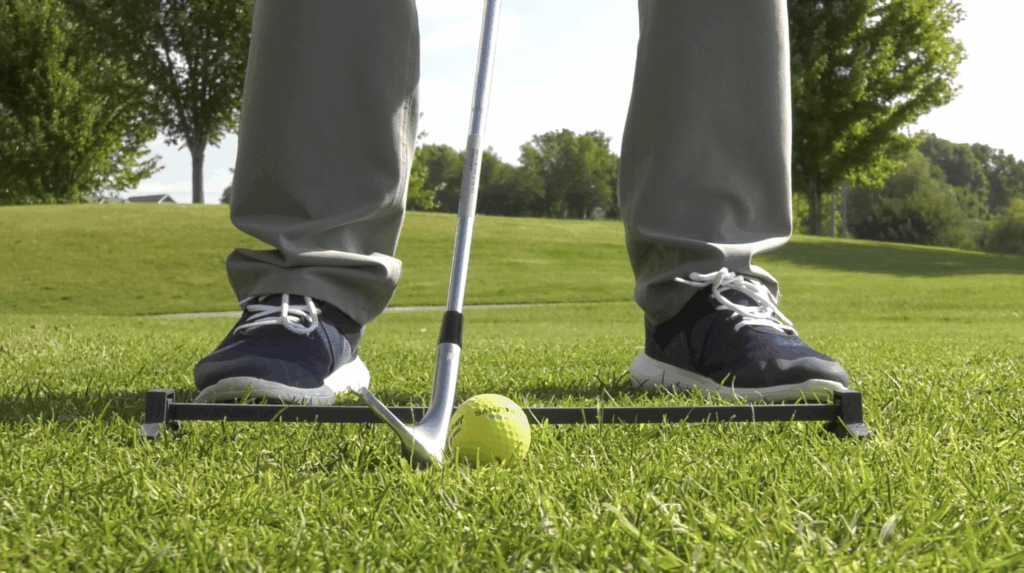
Wedges are designed to create precision. The relationship between the club’s loft and where it meets the ball determines how high it launches and how much it spins. Ball position directly influences that impact point. Move the ball back, and you’ll hit it earlier in your swing arc with a slightly de-lofted face. Move it forward, and you’ll catch it later in the arc with more loft exposed.
Even small adjustments can make a big difference. An inch or two forward might produce a higher, softer shot, while moving it back can create a lower-flighted, one-hop-and-stop type of wedge. The trick is knowing when and how to make those adjustments.
The Basics: Neutral Position
Before experimenting, you need a baseline. For a stock wedge shot (something like a 50-yard pitch or full 100-yard shot) play the ball roughly in the center of your stance, with your weight balanced slightly toward your lead foot (about 60-40). This position allows you to compress the ball properly, control spin, and strike it cleanly with a descending blow.
Your hands should be just ahead of the ball at address, not pressed excessively forward. This neutral setup gives you a reliable foundation to start understanding the effects of small adjustments.
Ball Back: Lower Flight, More Control
Moving the ball slightly back in your stance (an inch or two toward your trail foot) creates a lower, more penetrating flight. You’ll make contact earlier in the swing, effectively reducing the dynamic loft at impact. The result is a shot that comes out lower, skips once, and then checks up.
This is the go-to setup for windy days, firm greens, or when you need the ball to run out a bit more after landing. However, playing the ball too far back can lead to digging or excessive shaft lean, which increases the chance of chunking or thinning the shot.
Key tips:
- Keep your weight slightly forward and maintain rhythm.
- Focus on brushing the turf after impact, not stabbing down.
- Use this position for bump-and-run-style wedges or low-checking pitches.
Ball Forward: Higher Flight, Softer Landing
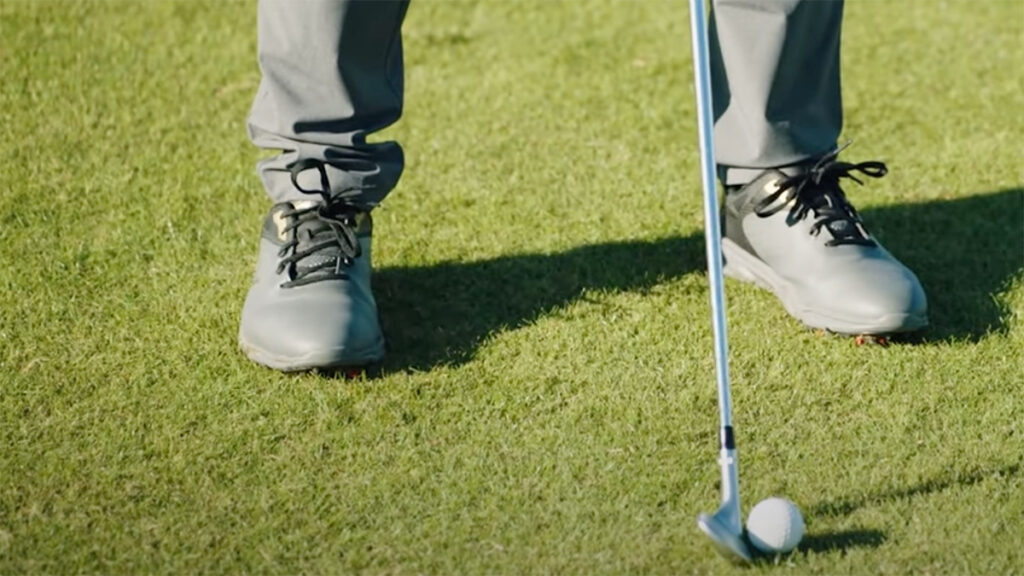
If you need to hit it higher and stop it faster, move the ball forward in your stance, closer to your lead heel. This adjustment increases the effective loft at impact and shallows the angle of attack, launching the ball higher with more spin.
You’ll typically use this setup for short-sided chips, flop-style shots, or approaches that must land softly on firm or elevated greens.
Key tips:
- Keep your stance slightly open to maintain a natural path through impact.
- Allow your chest to rotate through without forcing the club under the ball.
- Use your most lofted wedge (like a 58° or 60°) to maximize stopping power.
Be aware that forward ball position can increase the risk of hitting it thin if your low point drifts too far back, so focus on staying centered over the ball through the shot.
Small Shifts, Big Results

You don’t need major adjustments to see noticeable changes. Start with a neutral setup, then move the ball forward or back by half-ball increments during practice. Observe how it changes flight and spin.
Using alignment rods or tees on the range can help you visualize these shifts. Many PGA and LPGA professionals practice this way to learn how subtle changes affect their launch windows.
Practice Drills
1. The Three-Ball Drill
Set three balls in a line: one centered, one two inches forward, one two inches back. Hit each with the same swing and note the differences in flight and rollout. This teaches you the feel for trajectory control and helps you understand what setup fits each shot.
2. Landing Zone Ladder
Place three targets at varying distances (e.g., 20, 40, 60 yards). Use the same wedge but change only ball position to reach each target. You’ll start to feel how setup, not swing length alone, controls distance and spin.
Bringing It to the Course

Once you understand how ball position affects your flight, you’ll have options. A back-foot setup gives you a lower, more predictable trajectory when playing into the wind. A slightly forward position helps you stop the ball quickly when you’re attacking a tight pin.
The key is to keep your fundamentals consistent: weight slightly forward, smooth tempo, and clean contact. Adjusting ball position shouldn’t feel like a completely new swing, but rather fine-tuning your setup to match the shot.
Final Thoughts
Controlling wedge flight isn’t about swinging harder or softer, it’s about controlling where and how the club meets the ball. By learning how to use ball position as a tool, you’ll quickly gain more versatility and confidence with your scoring clubs.
The best wedge players aren’t just reacting to yardage; they’re reacting to conditions, trajectory needs, and how they can best deliver the club. Master ball position, and you’ll master flight. That’s how you turn a good wedge game into a great one.