
If you want to lower your handicap, your iron play has to improve. While drivers get the spotlight and putting often gets the blame, approach shots are what truly determine scoring potential. The right golf iron drills don’t just make your swing look better on the range. They build the kind of consistent contact that leads to more greens in regulation and fewer big numbers.
Most mid-handicap golfers don’t struggle because of effort. They struggle because of inconsistent strike quality. Thin shots, heavy contact, and unpredictable carry distances are what hold scoring back. Effective golf iron drills are designed to control low point, tighten dispersion, and improve compression, three things that actually translate to lower scores.
Train Low-Point Control First
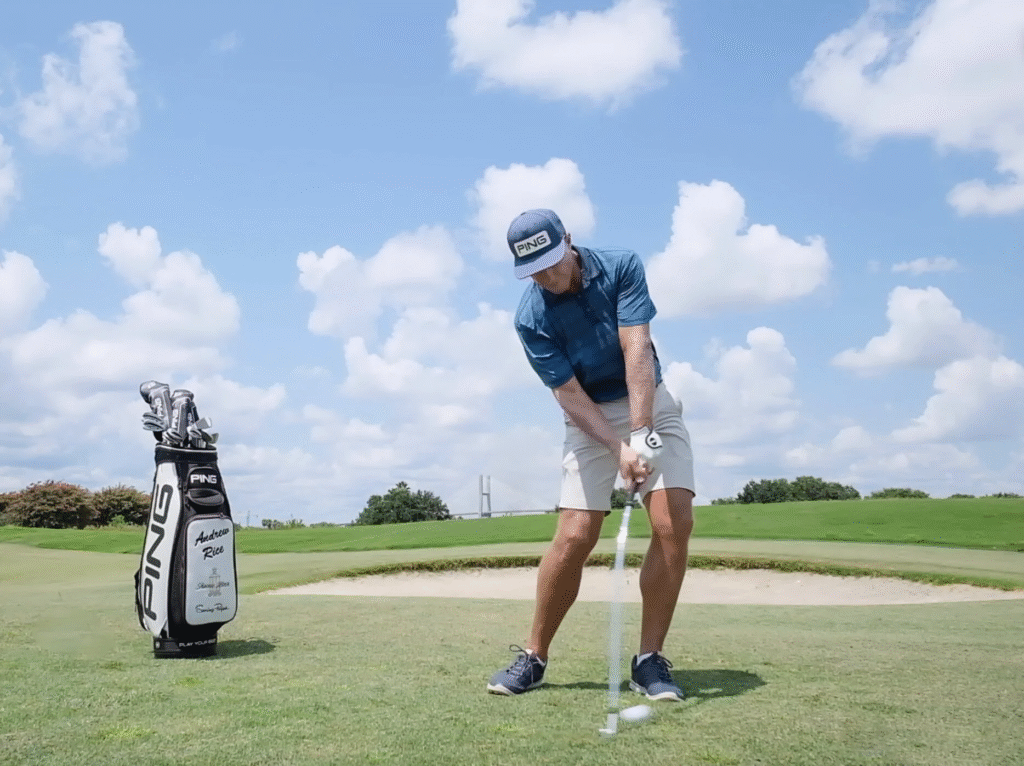
One of the most reliable golf iron drills for better contact is the towel drill. Place a towel four to six inches behind the golf ball and make normal swings without touching it. If you strike the towel, your low point is too far back. This drill trains you to shift pressure forward and strike the ball before the turf. When low-point control improves, iron consistency improves immediately.
Prioritize Control Over Speed
Another highly effective option among golf iron drills is the three-quarter swing drill. Many golfers overswing in an attempt to gain distance, which often leads to poor balance and face control. By rehearsing controlled three-quarter swings, you improve rhythm and centered contact. Most players discover that their carry distance remains similar, but their dispersion becomes noticeably tighter. For scoring, tighter dispersion matters far more than an extra five yards.
Use Divots as Feedback
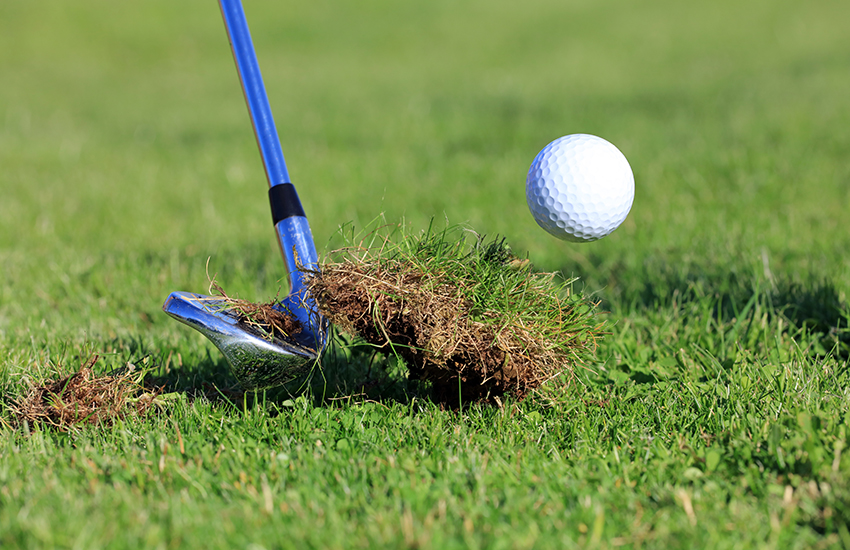
After each shot, check where your divot begins and where it points. Quality iron strikes produce a divot that starts just after the ball and travels close to the target line. Using turf interaction as feedback is one of the most underrated golf iron drills because it teaches you to self-diagnose without relying on video or swing thoughts. Your divot is immediate, honest feedback.
Practice Like You Play
Practice structure matters just as much as drill selection. Instead of hitting the same club repeatedly, rotate irons every swing. Step back, reset, and treat each shot like it’s on the course. When golfers add variability to their golf iron drills, they see better transfer from the range to actual rounds because they’re training decision-making and focus, not just mechanics.
The Real Goal: Predictable Contact
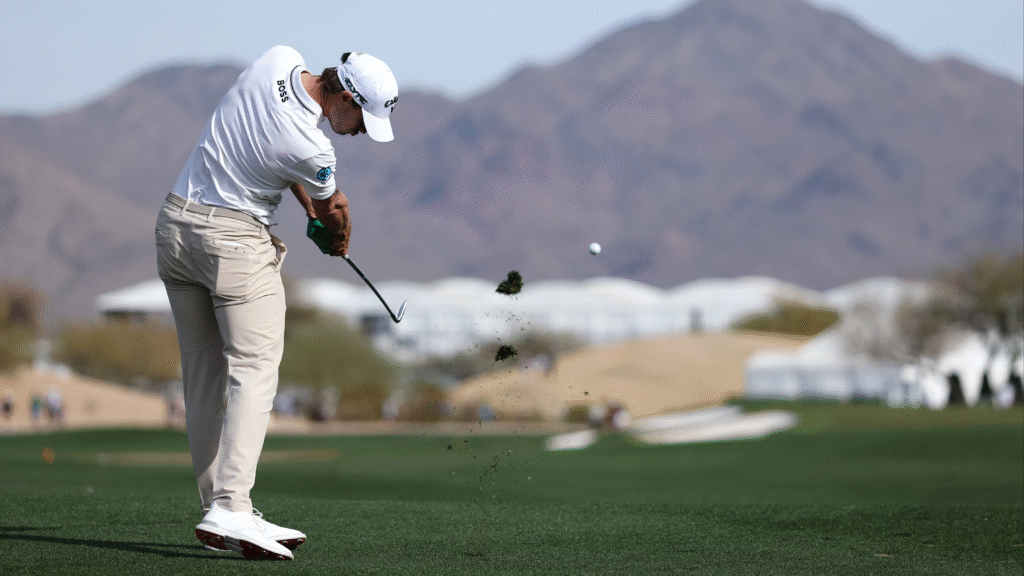
The purpose of these golf iron drills isn’t to build a perfect-looking swing. It’s to create predictable contact. Better contact leads to improved distance control. Improved distance control leads to more greens hit. And more greens mean fewer scrambling situations and fewer doubles on the scorecard.
Iron play doesn’t need to be flashy to lower your handicap. It needs to be reliable under pressure. Commit to practicing golf iron drills that train impact rather than positions, and you’ll start seeing measurable improvements where it matters most. Your score.