
(And Why Most Miss the Mark)
Spikeless golf shoes are everywhere. They look sharp and may feel comfortable in the store. They promise versatility, style, and walkability.
But most golfers never ask the most important question:
Does this shoe actually help me play better golf?
Spikeless shoes dominate the market (about 63%!) because they look and feel like sneakers. Many are built like sneakers too. That creates comfort and style, but often sacrifices stability and traction.
If performance matters to your game, here’s the checklist that actually counts.

The Spikeless Performance Checklist
1. Traction Geometry
Spikeless traction needs intention behind it.
The outsole should create directional grip that supports rotational movement through the swing. Random rubber nubs and flat pads struggle to maintain consistent ground connection, especially under lateral force and torque.
When traction lacks purpose, stability becomes unreliable when it matters most.
2. A Roomy and Stable Base
Your feet are the foundation of your swing.
A narrow base limits balance and makes it harder to stay centered throughout rotation. A stable, roomier platform allows your body to rotate freely while maintaining control from address through impact.
If a shoe aggressively tapers through the forefoot or midfoot, stability is compromised before the club ever moves.
3. Overall Structure (Not Softness)
Many spikeless golf shoes feel great when you first step into them. Plush cushioning, flexible uppers, and sneaker-like softness create an immediate sense of ease. The problem shows up once you start swinging.
A large portion of spikeless shoes on the market are so flimsy that you can literally pick them up and twist them in half. If a shoe collapses in your hands, it will collapse under swing load. When that happens, support disappears exactly when you need it most.
High swing speeds create rotational force and vertical load through the feet. Without structure, that force has nowhere to go. Energy leaks out through excessive twisting and internal foot movement before it ever reaches the ball.
Too much softness accelerates fatigue as well. When a shoe lacks structure, your feet and lower body are forced to stabilize what the shoe should be handling. Over the course of a round, posture breaks down and swing consistency evidently suffers.
4. Quality Foam That Holds Its Shape
Not all cushioning is created equal.
Lower-grade foams compress quickly and unevenly. That leads to instability and faster fatigue. Once the midsole collapses, the entire platform loses integrity.
High-quality performance foam should deliver cushioning and rebound while maintaining structure over time. The goal is controlled energy return, not a soft landing that disappears after a few rounds.
The Twisted Truth
You may have heard us say it before: “If you can twist it, toss it.”
Here’s why it matters.
Pick up your golf shoe. Hold the heel in one hand and the toe in the other. Try to twist it. If the shoe bends, folds, or wrings out easily, it lacks the structural support required for real golf performance.
That twisting motion you feel in your hands is the same motion stealing power during your swing.
Structure is what allows ground connection to matter. Without it, traction becomes irrelevant and comfort becomes counterproductive.
Performance falling short despite solid mechanics and consistent effort often has less to do with your swing than your foundation. Proper footwear supports ground connection, conserves energy, and helps your body work efficiently through all 18 holes.
Why Most Spikeless Shoes Miss the Mark
Most spikeless buying decisions revolve around:
-
Sneaker-style design
-
Lightweight feel
-
Color and visual appeal
Many spikeless shoes on the market prioritize lifestyle appeal over golf-specific engineering. The result feels good during walking and everyday wear, but is costing you on the course.
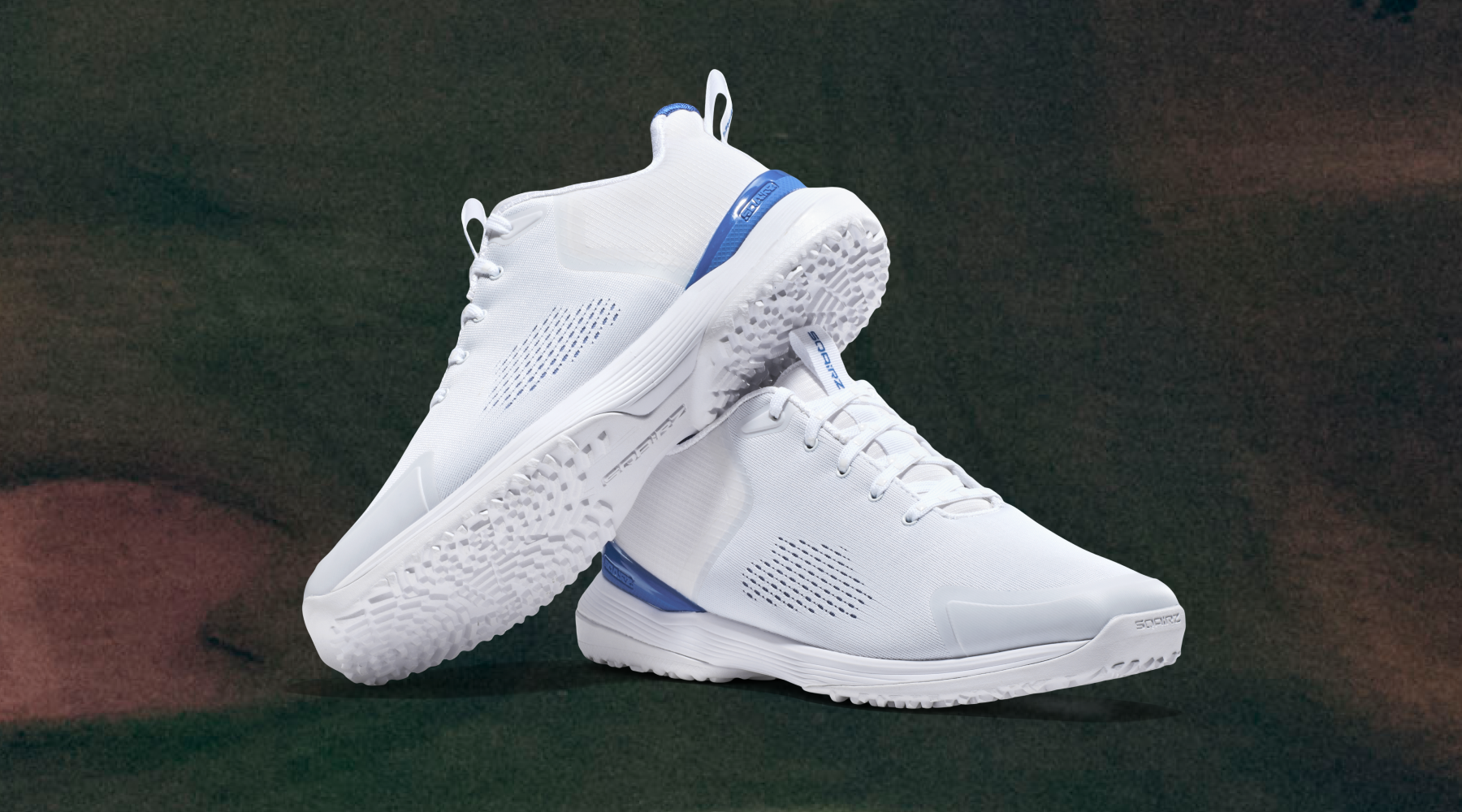
That’s Why We Made the SPEED3™ SL
If you asked us five years ago whether we would ever make a spikeless golf shoe, we probably would have laughed.
But we studied the market closely. We tested what golfers were actually wearing. And we saw a clear gap between how spikeless shoes looked and how they performed.
So we approached spikeless footwear the only way we know how. Using biomechanics, force transfer, and swing demands as the starting point.
SPEED3™ SL takes what we learned from performance spiked footwear and applies it in a spikeless format, engineered the SQAIRZ way.
SmartTraction™ Spikeless Outsole

Over 250 directional traction points arranged in a rotational pattern designed specifically for golf swings. The geometry supports movement through the swing while maintaining consistent ground connection.
Structured Performance Platform

Built to deliver stability without excessive bulk. The platform resists collapse under load, creating a stable base for rotation, balance, and energy transfer.
Blumaka® Anti-Slip Footbed

A premium performance footbed valued at $60, included in every pair. Designed to deliver rebound, durability, and anti-slip grip underfoot. Think of this as an extra source of stability.
Roomier Toe Box Geometry

Allows natural toe splay for improved balance, posture, and stability. The forefoot platform supports proper athletic positioning from address through impact.
Lightweight Ripstop Upper

High-strength, breathable construction that maintains structure and durability without sacrificing comfort or walkability.
The Decision
Now you know what actually matters.
Most spikeless shoes chase style. SPEED3™ SL chases performance — and brings comfort and modern design along for the ride.
If you want spikeless that truly performs, you already have your answer.