

GPS vs RFID: There’s a smarter, simpler way to understand what happens on your course.
As more clubs look to technology to answer questions traditionally debated in the clubhouse or committee room, the question is: what’s the best tech for embracing that future?
The insights data provides helps answer unknowns around pace of play, course utilisation, and who’s playing when and where, which all ultimately improve the member/guest experience and club operations.
Technology helps. But does more sophisticated tech always produce better results? Absolutely not.
I’ve spoken to dozens of clubs whose first question is around GPS. Indeed, it feels like GPS is the assumed darling of the golf world. And for sure it has an important place, offering useful distances, course mapping and detailed location information.
But when the objective is understanding pace, tracking course usage and identifying member habits and playing patterns, there’s another option worth serious consideration: RFID.
Simple for the golfer. Powerful for the club.
One of RFID’s biggest advantages is its simplicity. A small, lightweight tag can be carried by a golfer without a bulky device, a screen to navigate or a battery that needs regular charging.
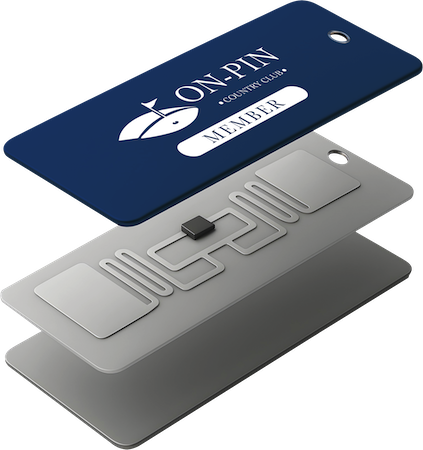
Once registered, golfers can simply get on with their round. The technology works in the background, without needing to open an app, switch on a device or manage another piece of equipment. A single tag can last a decade – untouched by the member or the club. Set and forget data delivered to the clubhouse whenever a player is on the course.
That matters. Golfers want to play golf, not manage technology. For clubs, fewer steps mean less friction for members, visitors and staff, helping make consistent use easier to achieve. The right information, without the unnecessary complexity.
And what does a club actually need to know?
If the goal is to improve pace, understand utilisation and identify where delays occur, continuous location tracking isn’t always necessary. RFID can capture information at designated reading points as golfers move around the course, helping clubs build a clearer picture of playing patterns and round times.
It offers a more focused approach to collecting operational data, without necessarily requiring continuous individual location tracking. For clubs looking for meaningful insight without unnecessary complexity, that can be an attractive balance.
Every additional device, charging requirement or process introduces another potential point of friction. Not to how and where to mount on a player’s bag or cart. What if they walk? What if they carry? RFID offers a straightforward alternative through lightweight tags, passive operation and simple registration.
The resulting data undeniably helps clubs make more informed decisions. Where are rounds slowing down? Are tee times being used as expected? Are there recurring patterns that suggest changes to course management could make a difference?
This isn’t about dismissing GPS. Different technologies solve different problems, and some clubs may benefit from using them together. But if your priority is a simple, low-maintenance way to understand pace of play and course activity, RFID deserves a closer look.
Learn more about On-Pin Verifeye at on-pin.com.
 About On-Pin
On-Pin is a leading provider of innovative golf course management solutions. Its patented Verifeye system utilizes cutting-edge technology and the only solution to have individual data to deliver real-time insights that enhance operational efficiency and player satisfaction. Committed to advancing the golf industry, On-Pin continues to develop tools that empower operators and elevate the game.
Media contact:
Matt De Groot
matt@on-pin.com
The post Less Tech in the Golfer’s Hands. More Intelligence for the Club appeared first on The Golf Wire.