
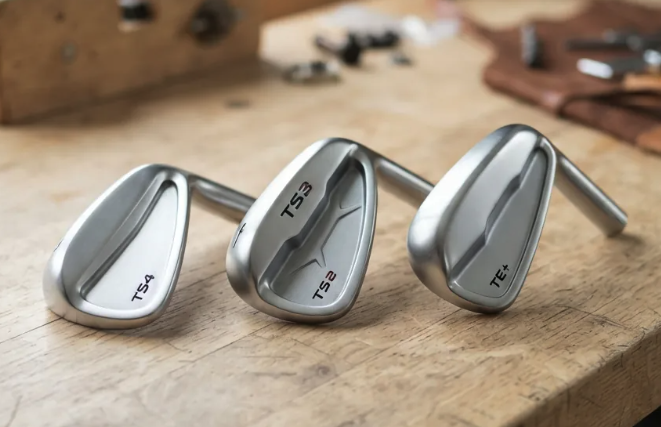
There’s a moment every gear nerd knows. You’re on the range, you hand your buddy a club, he hits one ball, looks at the face, looks at you, and says: “What is this?”
Nine times out of ten, the answer isn’t a brand with a tour truck. It’s a component head. And for the last few decades, one of the most common answers to that question has been Maltby.
If you’ve never heard of Maltby Co., that’s not an accident it’s the business model. This is a brand that has spent 30-plus years building its reputation in club making workshops and forum threads instead of 30-second commercials. But with maltbyco.com now running as its own direct-to-consumer storefront, it’s worth asking the obvious question: is this finally the smartest money in golf equipment, or is it a project for people who already own a swing weight scale?
Short answer: a bit of both. Here’s the honest breakdown.
First, the name behind the name
Maltby is owned and operated by The GolfWorks, the company Ralph Maltby founded in 1976 out of his basement in Ohio. If you’ve ever had a club repaired, re-gripped, or bent at a big-box retailer, there’s a decent chance the supplies and the gauges came from GolfWorks. Ralph didn’t just sell components — he helped build the vocabulary of modern club fitting and clubmaking education, and he spent five decades explaining the physics of a golf club in language normal humans could follow.
Ralph Maltby passed away on June 5, 2026, eighteen days after losing his wife Donna. It’s worth saying plainly, because the brand you’re shopping today is the product of that specific career not a venture-capital label that bought a name and outsourced the design. The GolfWorks has said it intends to carry the standard forward, and maltbyco.com is the most visible sign of that.
That matters when you’re deciding whether to send a stranger several hundred dollars. You’re not buying hype. You’re buying a design lineage.
What the Maltby model actually is
Here’s the uncomfortable math of golf retail: a forged iron set from a major brand carries tour staff salaries, demo-day fleets, TV inventory, sponsored content, and a retail margin on top of the manufacturer’s margin. You are paying for all of it, every time you buy a set.
Maltby’s pitch is that it removes most of that stack. The company sells components heads, shafts, grips, assembly supplies and complete builds, direct. No celebrity endorsements. No shelf space at your local superstore. The claim on maltbyco.com is straightforward: tour-level forged quality without the tour-level price tag, because the money went into the steel instead of the marketing.
Is that marketing itself? Sure, a little. Every value brand says some version of it. What makes Maltby a slightly different case is that the components are sold to club makers people who compare head weights, center-of-gravity numbers, and loft gaps for a living. That audience doesn’t tolerate sloppy product for long.
The lineup: where the money should go
Maltby’s catalog covers the whole bag, but the forged irons are the reason most people end up on the site.
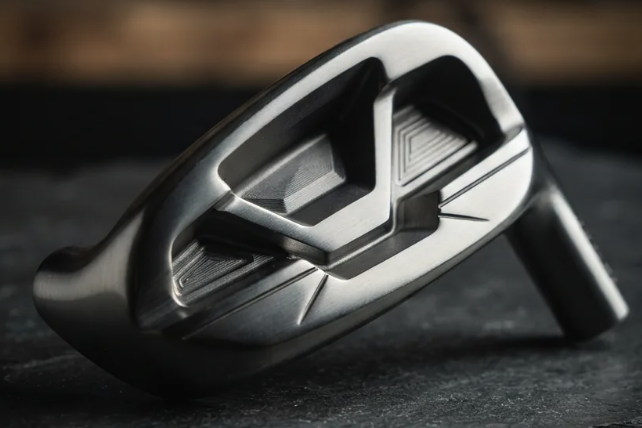
TS1 Forged Irons — The current flagship, and the most interesting club in the lineup. True-forged 1025C carbon steel face and body, hollow polymer injection through the 3–9 irons for weight redistribution, tungsten in the toe to pull the center of gravity back to center, and a five-step forging process. Translation: it’s a forged club with modern forgiveness rather than a blade wearing a game-improvement badge.
DMB Forged Irons — The purist’s option. Compact blade profile, thin topline, minimal offset, soft 1025C carbon steel. This is the club for the player who wants feedback and shot control and is willing to accept the miss penalty that comes with it.
KE4 Max 460cc Driver — High-MOI, perimeter-weighted, low-and-deep CG, big deep face. The design goal is squarely “help me hit this straighter,” which is the correct goal for most of us.
KE4 Tour TC 3-Wood — Shallow face, low deep CG, stainless head, paired with a Kuro Kage graphite shaft. Built to get the ball up off the deck, which is where fairway woods usually go to die.
M-Series #3 Hybrid — High-strength steel face cup on a low-profile body, internal weighting for a high launch and a shallow landing angle. The “get out of jail” club.
Pure-Throw Forged Wedge — Forged 8620 carbon steel, precision-milled grooves, versatile teardrop grind that handles full shots, chips, and sand without needing three different wedges.
KE4 Tour TD Putter — 303 stainless blade with a milled face insert and a plumber’s neck for slight toe hang. Traditional, and priced like a putter should be.
Single iron heads — You can buy one head. A #7 iron, a replacement 8-iron, a practice club. Very few brands will sell you a single forged head, and it’s quietly the best thing on the site.
The parts nobody puts in the brochure
This is where a review earns its keep.
You are the assembly line — or you hire one. Buying components means somebody has to install shafts, set swingweights, check lies and lofts, and grip them. If you enjoy that, Maltby is a hobby and a set of clubs at the same time. If you don’t, you’ll need a local clubmaker and the money you saved on heads partly goes to labor. The site is built as a workshop and a technical library, so the information is there, but the labor is real.
No demo day. You can’t walk into a hitting bay and try three shaft options before committing. The de facto solution is the single-iron route: buy one head, build it, hit it, then commit. That’s a smarter process than most fittings, honestly, but it takes a few weeks instead of an afternoon.
Resale is not a thing. A set of Maltby irons will not hold value like a major OEM set. If you flip clubs every 18 months, this is the wrong purchase.
The badge is blank. If part of the pleasure of golf is the logo on your bag, Maltby won’t deliver it. The brand’s own positioning is blunt about this: if you need a famous logo stamped on the back of the club, this may not be what you expect.
Support and warranty are handled by a small operation, not a national retail chain. In practice, the GolfWorks customer base is loyal and the technical support is knowledgeable, but you are dealing with a specialist, not a big-box return counter.
Who should buy, and who shouldn’t
Buy if: you’re a tinkerer, you already know your specs (or want to learn them), you care more about feel and ball flight than badge prestige, you want forged irons without a forged-iron price, or you need one club rather than eight.
Skip if: you want to walk out of a store with a set today, you need a brand that impresses your foursome, you flip gear regularly, or you have zero interest in learning what swingweight means.
Consider a middle path if: you like the value but not the work. Buy the heads, then pay a local clubmaker to build and blueprint them. You still come out ahead of most OEM sets, and you get a set assembled by someone who checks their work.
The verdict
Maltby Co. isn’t trying to win a brand war, and that’s exactly why the equipment is interesting. The TS1 and DMB irons are genuine forged designs with real engineering decisions behind them tungsten weighting, polymer injection, five-step forging, honest blade geometry sold without the retail markup that usually funds all of the above twice over.
The trade is convenience and prestige for substance and money. If you’re the kind of golfer who reads a spec sheet and asks “why,” that’s a trade worth making. If you’re the kind who wants to be handed a club and told it’s the one, no component brand will ever be your answer.
One practical note before you buy: pricing and availability on maltbyco.com move around, so confirm current numbers on the site rather than trusting a review including this one. And if you’re ordering irons, start with a single head. Your swing will tell you more in one range session than any spec table will in an hour.
Have a Maltby build in the bag? We want to hear how it went — head to the comments or tag us.